When it comes to steak, most people think of juicy flavors and mouthwatering tenderness. But what if you could enjoy all that deliciousness without the guilt of excess fat? Enter the leanest steak, the superhero of the meat world. It’s like the Clark Kent of beef: unassuming yet packed with protein and flavor, ready to save your dinner from the villain of calorie overload.
Overview of Lean Meats
Lean meats consist of cuts with lower fat content, making them healthier choices. Examples include chicken breast, turkey, and certain beef cuts like sirloin and tenderloin. These meats retain essential nutrients while minimizing unhealthy fats, appealing to health-conscious eaters.
Lean meats are often packed with protein, which supports muscle growth and tissue repair. A serving of lean beef contains approximately 22 grams of protein, a significant contribution to daily requirements. Deciding to incorporate these meats into meals promotes a nutritious, balanced diet.
Cooking methods influence the health attributes of lean meats. Grilling, baking, and steaming help preserve their low-fat qualities compared to frying. Selecting herbs and spices for seasoning enhances flavor without adding excessive calories.
The nutritional advantages extend beyond protein. Lean meats provide essential vitamins and minerals such as iron, zinc, and B vitamins. Ensuring an adequate intake of these nutrients supports overall well-being.
When assessing lean meats, consider the specific cuts. For beef, sirloin, tenderloin, and eye of round offer diverse options with minimal fat. Similarly, pork loin and skinless chicken provide excellent alternatives for healthy meal planning. Aim for variety to enjoy different flavors and benefits found in these diverse cuts.
Understanding Steak Cuts
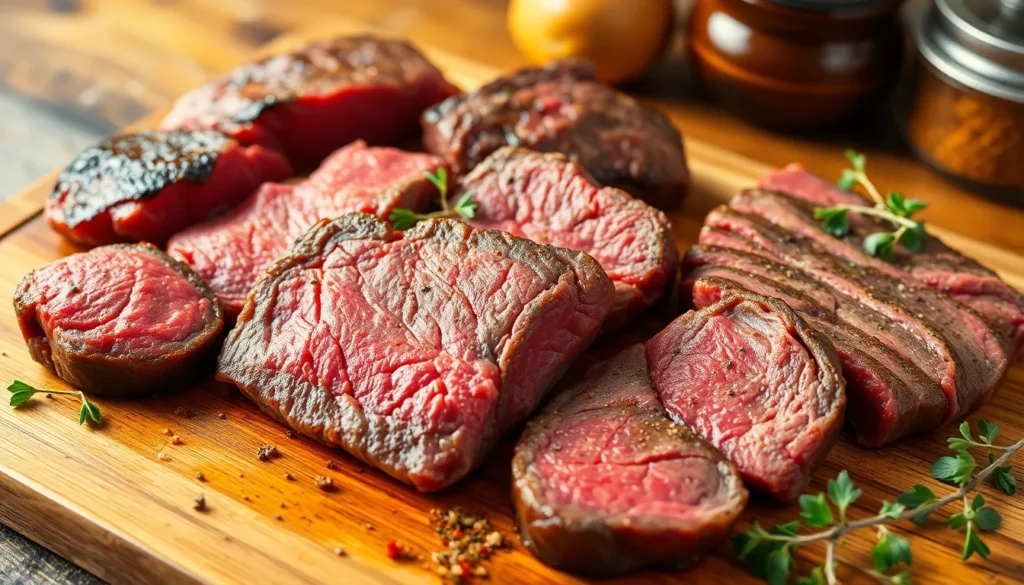
Steak cuts vary significantly in flavor, tenderness, and fat content. Some cuts offer healthier options, making informed choices essential for a nutritious diet.
Common Types of Steak
Top selections include sirloin, tenderloin, and flank steak. Sirloin provides a balance of tenderness and flavor while being lower in fat. Tenderloin ranks among the most tender cuts, ideal for grilling or pan-searing. Flank steak brings a rich taste but requires careful cooking to avoid toughness. Other notable options are ribeye and T-bone, which are flavorful yet higher in fat. Choosing leaner cuts supports health goals without sacrificing taste.
Key Terms in Steak Classification
Understanding steak terminology aids in making informed choices. USDA grades indicate quality, with Prime, Choice, and Select being the most common. Marbling refers to the fat distribution within the meat, influencing flavor and tenderness. Cut names specify muscle types, such as rib, short loin, or round. Knowing these terms ensures selection aligns with dietary preferences and culinary needs. Educated choices lead to a satisfying eating experience while emphasizing lean options.
Nutritional Profile of Lean Steak
Lean steak offers essential nutrients while maintaining a lower fat content, making it a nutritious choice for a balanced diet.
Protein Content
Protein content varies among different lean steak cuts. Typically, a 3-ounce serving of sirloin steak contains approximately 26 grams of protein. Tenderloin offers a similar protein level, making both cuts excellent sources for muscle growth and repair. Rich in amino acids, these proteins support overall health. Consuming lean steak contributes to daily protein needs without excess calories.
Fat Content
Fat content is notably lower in lean steak compared to traditional cuts. A 3-ounce serving of sirloin contains about 6 grams of total fat, with only 2 grams being saturated fat. Tenderloin presents a similar profile, emphasizing its appeal to health-conscious consumers. Opting for lean cuts helps maintain a low saturated fat intake, aligning dietary choices with heart health goals. Choosing lean steak ensures flavorful meals while keeping fat consumption in check.
What Is the Leanest Steak?
The leanest steak provides a satisfying option for those seeking flavorful yet low-fat meals. Health-conscious eaters often prefer specific cuts known for minimal fat content.
Best Cuts for Lean Steak
Sirloin and tenderloin rank among the best cuts for lean steak. Sirloin typically has around 6 grams of total fat per 3-ounce serving, offering a balance of tenderness and flavor. Tenderloin closely matches this profile, providing similar fat content and exceptional tenderness. Flank steak also deserves mention; while slightly higher in fat, its lean appeal and rich taste make it a popular choice. Selecting these cuts ensures a nutritious steak choice that aligns well with health goals.
Comparison with Other Meats
Lean steak compares favorably to other lean protein sources. Chicken breast delivers about 26 grams of protein per 3-ounce serving with lower fat, typically around 2.7 grams. Turkey offers a similar nutritional profile, making it another attractive option. However, lean steak’s unique flavor sets it apart. It offers essential nutrients that supports muscle growth. This distinct taste allows individuals to diversify their meals while staying within healthy fat limits.
Cooking Techniques for Lean Steak
Cooking techniques significantly influence the texture and flavor of lean steak, enhancing its natural qualities while keeping it healthy.
Best Practices for Preparation
Choosing the right cut is crucial for optimal flavor and tenderness. Prioritizing sirloin or tenderloin ensures lower fat content without sacrificing taste. Trimming any excess fat before cooking promotes a leaner, healthier meal. Marinating the steak also adds flavor while helping tenderize the meat. Using simple ingredients like olive oil, garlic, and herbs makes for an effective marinade. Allow the steak to marinate for at least 30 minutes. Peeking at the internal temperature during cooking aids in achieving the desired doneness. A meat thermometer guarantees that lean cuts reach 145°F for medium-rare.
Tips for Grilling and Cooking
Grilling remains a popular method for preparing lean steak. Preheating the grill ensures even cooking and proper searing. Utilizing direct heat for the first few minutes creates a nice crust, enhancing flavor. Flipping the steak only once prevents moisture loss, contributing to juiciness. Avoiding overcrowding on the grill allows for proper air circulation. Cooking for the right duration depends on the thickness of the cut. Thin cuts require about 4-6 minutes per side, while thicker cuts may need 6-8 minutes. Letting the steak rest for 5-10 minutes post-cooking redistributes juices, promoting tenderness in each bite.
Choosing the leanest steak can significantly enhance a healthy diet without sacrificing flavor. Cuts like sirloin and tenderloin provide a delicious balance of taste and nutrition, making them ideal options for those looking to reduce fat intake. These lean steaks not only support muscle growth but also offer essential nutrients that contribute to overall health.
By exploring various cooking methods and selecting the right cuts, individuals can enjoy satisfying meals that align with their dietary goals. Lean steak stands out as a versatile and flavorful choice, proving that healthy eating can be both enjoyable and nutritious.