Navigating the teenage years can feel like trying to solve a Rubik’s Cube blindfolded. Between awkward encounters and the ever-evolving social landscape, developing social skills is crucial for teenagers. These skills aren’t just essential for making friends; they’re the secret sauce for future success in both personal and professional realms.
Imagine a world where your teen confidently chats with peers, navigates group projects like a pro, and even manages to charm the socks off their crush. Sounds dreamy, right? Social skills development isn’t just about learning to talk; it’s about building connections that last a lifetime. With the right tools and a sprinkle of humor, teenagers can transform from shy wallflowers into social butterflies ready to take on the world.
Importance Of Social Skills Development In Teenagers
Social skills development plays a crucial role in the lives of teenagers. Building these skills offers pathways to meaningful friendships and successful interactions. Engaging with peers equips them with tools for future challenges in personal and professional arenas.
Communication skills serve as foundational elements for strong relationships. Effective listening and clear expression enhance mutual understanding. Confidence in social settings encourages teenagers to initiate conversations and foster connections.
Emotional intelligence is closely linked to social skills. Recognizing and managing emotions influence how teenagers relate to others. Empathy, a key component of emotional intelligence, aids in understanding diverse perspectives.
Involvement in group activities promotes teamwork and collaboration. Participation in sports, clubs, or volunteer organizations encourages cooperation. These experiences provide contexts for developing negotiation and problem-solving skills, essential for navigating conflicts.
Research highlights that teenagers with strong social skills often experience better academic performance and improved mental health. Those equipped with interpersonal abilities often report higher levels of happiness and reduced feelings of isolation.
Cultivating social skills prepares teenagers for adult life. As they move into their careers, interpersonal communication becomes vital for networking and building professional relationships. Employers consistently value candidates who demonstrate strong collaboration and communication skills.
Ultimately, social skills development equips teenagers to engage meaningfully with their environments. The resulting connections foster resilience and adaptability, key traits for success. Enhancing these skills results in confident, well-rounded individuals prepared to tackle future challenges.
Key Areas Of Social Skills Development
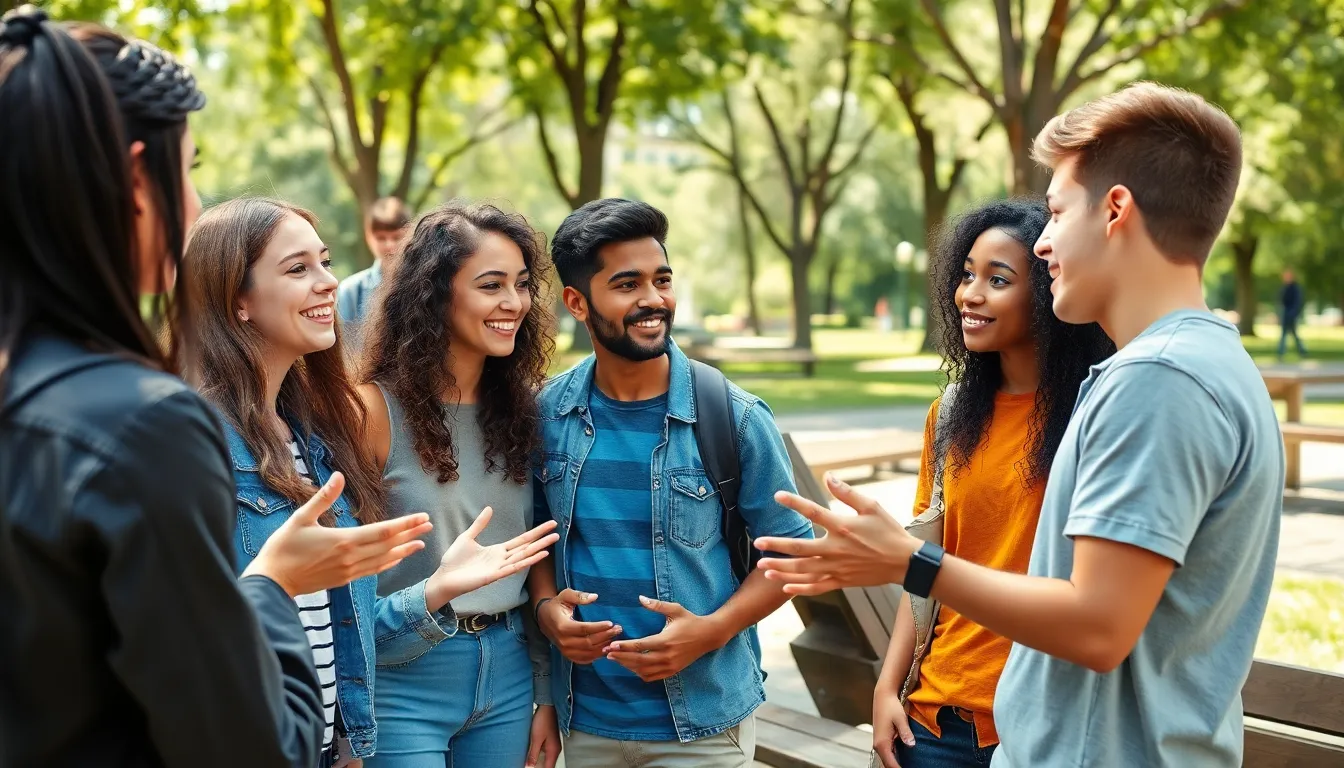
Developing social skills in teenagers encompasses several key areas essential for healthy relationships and personal growth. Focusing on these areas equips them for effective interaction in various settings.
Communication Skills
Strong communication skills form the backbone of effective relationships. Teenagers benefit from learning to express their thoughts clearly while also being attentive listeners. Engaging in conversations, asking open-ended questions, and providing relevant feedback improves their dialogue capabilities. Practicing these skills in group settings can foster a sense of belonging. Additionally, using nonverbal cues, such as eye contact and body language, enhances messages and shows confidence. Young people often find that mastering communication skills leads to smoother interactions and a broader social network.
Interpersonal Skills
Interpersonal skills encompass the ability to interact successfully with peers and authority figures. Teens usually develop these skills through team activities, like sports or group projects. Such involvement fosters cooperation and encourages conflict resolution through negotiation. Establishing trust and building rapport with others can lead to stronger connections. Furthermore, understanding social norms and adapting behaviors accordingly promotes inclusivity. Teens with well-developed interpersonal skills report more meaningful friendships and improved group dynamics, contributing to their overall well-being.
Emotional Intelligence
Emotional intelligence plays a vital role in teenagers’ interactions. Recognizing and managing one’s emotions often leads to improved relationships with others. Empathy, as a key component of emotional intelligence, allows teens to understand different perspectives. Developing this skill enhances their ability to respond appropriately in social situations. Compassion and kindness towards peers create supportive environments. Additionally, emotional regulation aids in coping with challenges, reducing stress and anxiety. Cultivating emotional intelligence prepares teenagers for diverse social contexts, ultimately enriching their personal and professional lives.
Challenges In Social Skills Development
Navigating teenage years presents various challenges for social skills development. Peer pressure and social media influence significantly impact how adolescents interact and connect with others.
Peer Pressure
Peer pressure often shapes teenagers’ behavior and decisions. Many youth feel compelled to conform to the expectations and behaviors of their friends, sometimes leading them to compromise their values or interests. This pressure can create anxiety or discomfort, hindering authentic social interactions. Effective communication becomes crucial in these situations, as teens should learn to voice their opinions and resist negative influences. Adolescents with strong social skills often manage peer pressure better, allowing them to cultivate genuine friendships and build self-confidence.
Social Media Influence
Social media influences how teenagers communicate and perceive social interactions. Online platforms can distort reality, often creating unrealistic standards for personal connections. Many teens rely on likes and shares for validation, which can detract from face-to-face interactions. Healthy social skills involve recognizing the balance between online and offline communications. Adolescents benefit from understanding the emotional impacts of social media, prompting them to engage more meaningfully in real-life situations. Promoting digital literacy equips teenagers with the tools necessary to navigate both realms effectively.
Effective Strategies For Enhancing Social Skills
Group activities create opportunities for teenagers to build social skills in a fun and engaging manner. Participation in sports teams fosters teamwork, teaching cooperation and shared goals. Youth clubs allow for diverse interactions, enhancing communication abilities through structured settings. Engaging in these activities leads to better problem-solving skills as teens learn to navigate group dynamics. Research shows that participation in collaborative environments boosts academic performance and mental well-being, reducing feelings of isolation and enhancing social confidence.
Role-playing scenarios present valuable practice for teenagers aiming to improve their social skills. These exercises simulate real-life situations, allowing teens to explore different perspectives and responses. Acting out scenarios like introducing oneself or resolving conflicts prepares them for actual encounters. Practicing empathy becomes easier as they step into others’ shoes, fostering emotional intelligence. Engaging in role-play sessions encourages open discussions about social norms, helping teens effectively analyze and learn from various interactions. Such strategies ultimately enhance their ability to form authentic connections.
Developing social skills during the teenage years is essential for fostering meaningful connections and ensuring future success. By engaging in group activities and practicing effective communication, teenagers can cultivate the confidence needed to navigate various social situations.
Emotional intelligence plays a vital role in this process, as it helps them understand and respond to the emotions of others. With the right strategies in place, such as role-playing and team participation, teenagers can transform their social interactions from daunting challenges into opportunities for growth.
Ultimately, these skills not only enhance their personal lives but also set the foundation for professional relationships in the future. Building strong social skills is a journey worth embarking on, leading to a more fulfilling and connected life.